Seams and spare fabric
The amount and condition of available material affect letting out. Earlier work may have changed it.
Bridal planning guide · Brisbane
The label cannot show how much spare fabric sits inside a seam or how the gown was made. A resizing decision needs the dress on its wearer and a check of its construction. Describe where it feels wrong, then ask which changes may be suitable.
An enquiry requests availability. The work, quote and appointment are confirmed separately.
At a glance
The useful question is not how many sizes can any wedding dress be taken in. Ask what your own gown allows, how the proportions may change and whether the result would retain the features you want.
01The starting point
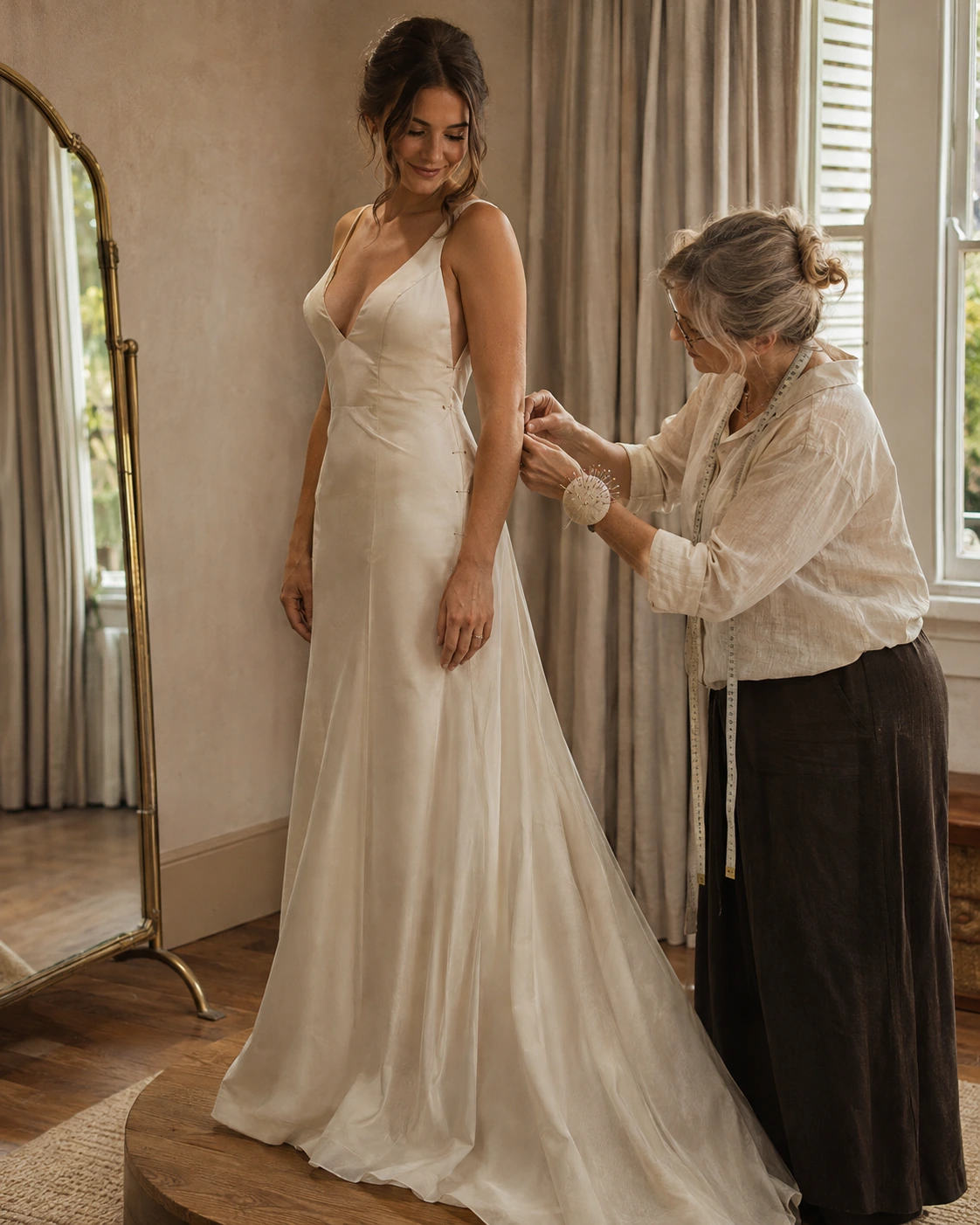
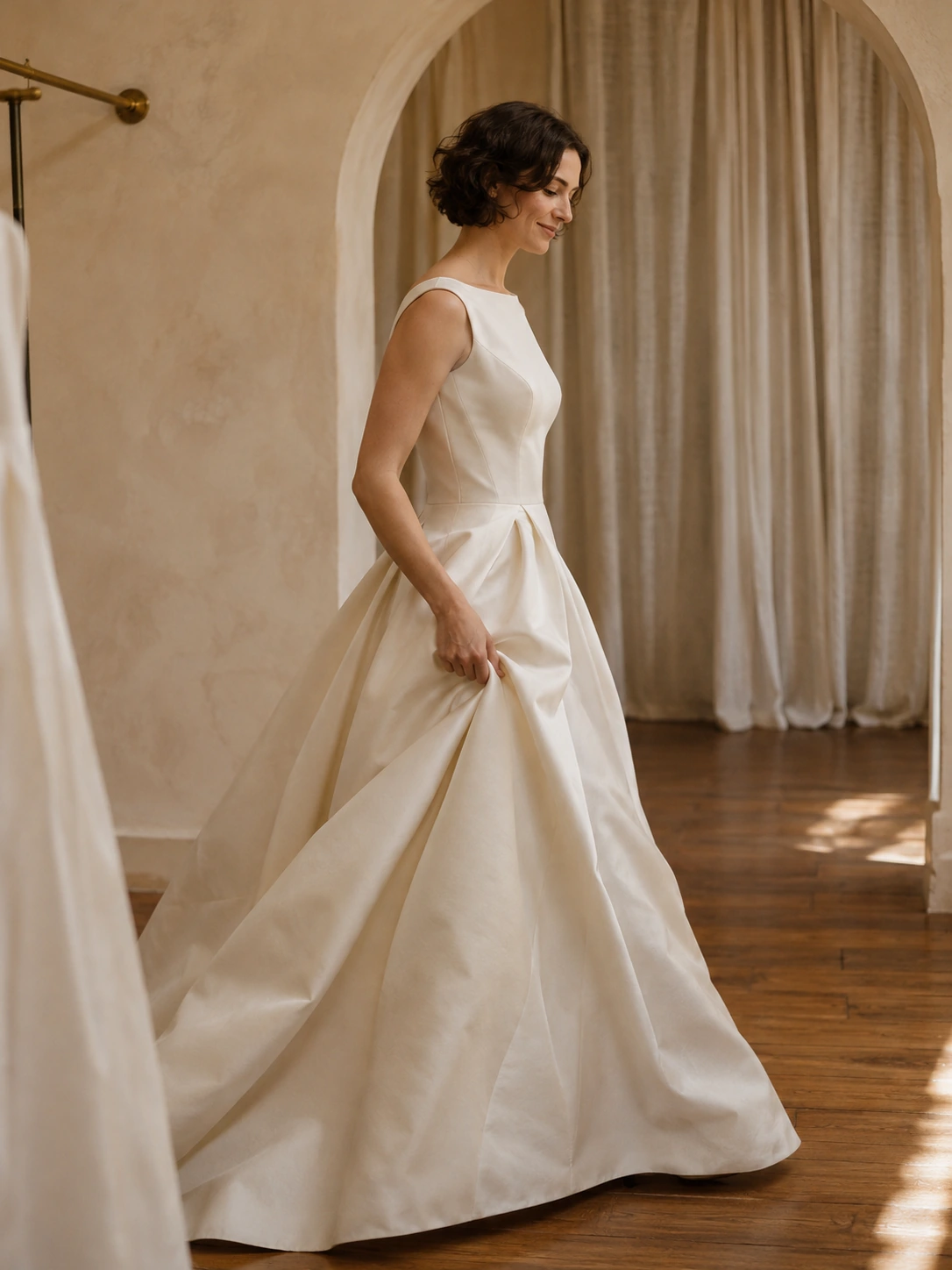
A gown may need less room in one area and a different change elsewhere. Tell the fitter where it gaps or slips. The aim is to assess the fit on you, not to make every seam smaller by the same measure.
Ask how the shape and detail would be retained.
Discuss your alterations
02Fit & construction
A tight dress cannot always be made larger by releasing a seam. The fitter needs to check what fabric is available and how the seam has been finished. If another design option is discussed, ask how it would affect the look, support and cost before agreeing to it.
Discuss your alterations
03The details
If the bodice feels unstable, describe that concern as well as the measurements. New cups or a different back are not interchangeable fixes. The existing structure and fabric need to be considered together. Check how any detail work is included in the proposed scope.
Discuss your alterations
04A clear next step
If you are buying online or second-hand, leave room in the decision for an assessment of the actual gown. Listing measurements help explain the dress. They do not prove how it can be changed. Ask about earlier changes and be clear if the dress cannot be returned before relying on a possible fix.
Discuss your alterationsPlan with clarity
Use these points to ask about the actual dress rather than apply a general rule.
The amount and condition of available material affect letting out. Earlier work may have changed it.
The neckline, armholes, support and skirt can be affected by a bodice change. Ask about the whole result.
A panel, closure or added fabric may be a separate scope. Confirm the appearance, material and quote before proceeding.
Before you visit
Keep the relevant outfit choices and questions together.
A few things to know
These answers explain the process and limits. Details for your own outfit must be confirmed after assessment.
There is no reliable number for every gown. The construction, proportions and proposed changes need assessment before a size change can be agreed.
No. The available material, seams and earlier work can limit extra room. Ask what options exist for the actual garment.
Do not assume that. A new closure is a design and structure question, not a standard fix. It needs its own assessment and quote.
Photos help show the request but cannot confirm every seam or the inner structure. The actual gown needs checking.
Seek advice before relying on that plan. A size chart or seller’s suggestion is not a promise that the gown can be changed as you expect.